
In short
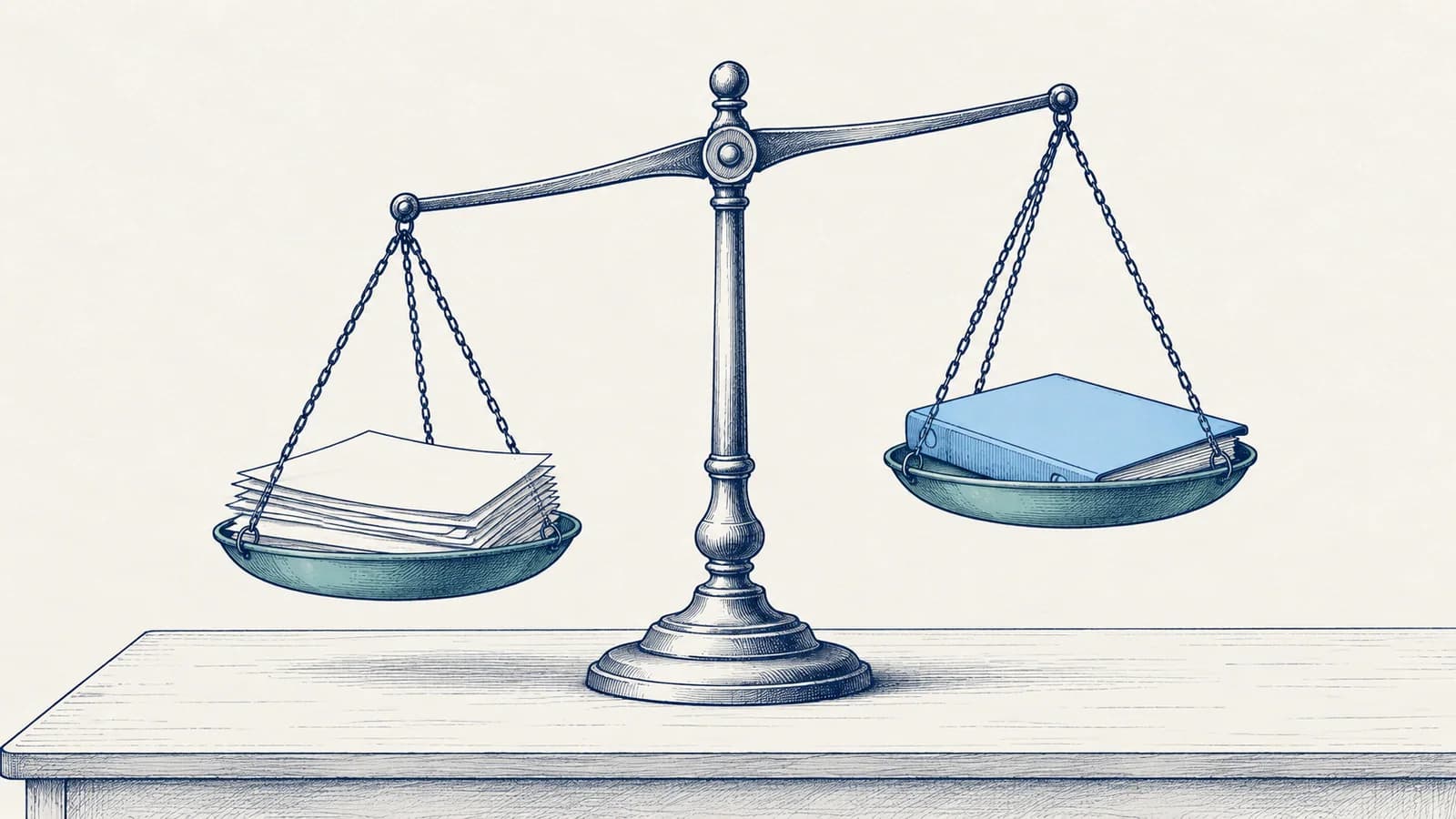
Matter of Chawathe is a precedent decision of the Administrative Appeals Office (AAO) from 2010, reported at 25 I&N Dec. 369, that is cited for the preponderance of the evidence standard. Under that standard, a petitioner must show that the claim is more likely than not true, and the quality of the evidence counts as well as the amount. Merito's sources know the decision through the way a later AAO decision, Matter of Dhanasar, cites it.
Also known as: Chawathe standard · preponderance standard in Chawathe
Where it applies
- Merito classifies this term under EB-1A, O-1A and EB-2 NIW. The text of Chawathe itself is not among the sources used here. What the sources show is that Matter of Dhanasar, an EB-2 national interest waiver decision, cites Chawathe, 25 I&N Dec. 369, 376 (AAO 2010), for the meaning of the preponderance standard.
- The USCIS Policy Manual explains the same standard in its chapter on burden and standards of proof. It says the preponderance standard is the one applied in most administrative immigration proceedings, and that it does not apply where the law specifies a different standard. The Manual gives examples of higher standards that the Immigration and Nationality Act provides in other kinds of cases.
Why it matters
The standard sets how much a record has to show. A petitioner does not need to remove every doubt. The Policy Manual says that even if there is some doubt, relevant, probative and credible evidence that leads an officer to believe the claim is probably true or more likely than not satisfies the standard.
It also frames what happens when the record falls short. The Policy Manual says that an officer who finds the standard unmet may request additional evidence, issue a notice of intent to deny, or deny the case. Reading a denial or a request for evidence therefore starts with a question: for which element does the record fail to make the claim more likely true than not?
The standard also sits beside, not in place of, the burden of proof. The Manual states that the burden falls solely on the benefit requestor and never shifts to USCIS. The standard measures how much evidence is enough; the burden says who must supply it.
How USCIS evaluates it
More likely than not
Dhanasar, citing Chawathe, says a petitioner must establish that he or she more likely than not satisfies the qualifying elements. The Policy Manual cites a Supreme Court decision, INS v. Cardoza-Fonseca, for defining more likely than not as a greater than 50 percent probability of something occurring. That figure describes the legal meaning of the standard for a fact in a record. It says nothing about the outcome of any petition.
Quantity and quality of evidence
Dhanasar states that the AAO considers not only the quantity but also the quality of the evidence, naming relevance, probative value and credibility. The Policy Manual uses the same three words, asking for relevant, probative and credible evidence. A document that does not bear on the element at issue, or that gives an officer no basis to believe it, adds little toward the standard.
Applied element by element
In Dhanasar, the AAO applied the standard separately to each part of the national interest test. It found the petitioner's research met the first prong, but concluded the record did not show by a preponderance of the evidence that his proposed teaching activities would affect STEM education more broadly. The standard was thus applied to specific elements, not to the record as a general impression.
Doubt and future success
The Policy Manual allows that some doubt may remain. Dhanasar adds that petitioners are not required to show their endeavors are more likely than not to ultimately succeed, because forecasting is difficult. It still requires them to show by a preponderance of the evidence that they are well positioned to advance the proposed endeavor. The standard is applied to what the petitioner must establish, not to eventual results.
A practical example
This is an invented illustration. A petitioner claims that a project has national importance and submits a one-line statement saying so, together with a detailed independent report on the project's reach. Reading the record under the preponderance standard, an officer asks whether each document is relevant, probative and credible for that element. The statement offers no source for its claim, while the report states its sources and method, so it gives the officer something concrete to weigh when deciding whether the claim is probably true.
A common misconception
One mistaken reading is that the preponderance standard requires proof beyond doubt. The Policy Manual says that even if there is some doubt, relevant, probative and credible evidence that makes a claim probably true or more likely than not satisfies the standard.
Common problems
Evidence that does not address the element
A document can be genuine and still be irrelevant to the element at issue. Dhanasar names relevance as one measure of quality. When a record is large but a given element rests on material that does not speak to it, an officer can see a gap between what was claimed and what was shown.
Claims with no stated source
A letter or statement that asserts a conclusion but names no source, data or event leaves an officer nothing to check. The sources describe credibility and probative value as part of how evidence is judged, so a bare assertion gives little to weigh.
Confusing the standard with the burden
The Policy Manual says the burden of proof never shifts to USCIS. A record that leaves a gap and assumes the agency will fill it misreads who must supply the evidence. The petitioner must come forward with facts and evidence showing initial eligibility.
How to document it
An element-by-element map of the record
List each element the category requires and the exhibits that address it, so an officer can see which documents bear on which claim.
Primary records behind each claim
Contracts, publications, award rules or official data show how a fact can be verified, which supports credibility and probative value.
Sourced letters
A letter that names the specific work, event or data it relies on gives an officer something to check instead of a bare opinion.
Independent corroboration
Material from outside the petitioner's own circle shows that a claim does not rest only on the petitioner's account.
Official sources
- USCIS Policy Manual, Volume 1, Part E, Chapter 4 (Burden and Standards of Proof) — accessed October 23, 2026
- Matter of Dhanasar, 26 I&N Dec. 884 (AAO 2016) — accessed October 23, 2026
Use it in Merito
Read your case the way an officer wouldLast reviewed October 23, 2026